
Why “Natural” Doesn’t Automatically Mean Better for Sensitive Skin
Before I started formulating skincare, I used to think natural automatically meant better.
And when you have sensitive or reactive skin, that assumption makes even more sense. If your skin already reacts to everything, a product covered in words like natural, botanical, clean and plant-based feels like it should be the safer choice.
But after years of dealing with sensitive skin myself — and now being deeply involved in developing products specifically for reactive skin — I’ve learned that it’s much more complicated than that.
Natural doesn’t automatically mean gentle. And synthetic doesn’t automatically mean harsh.
Your skin doesn’t know whether an ingredient came from a plant or a laboratory.
It responds to its chemistry.
Some of the most irritating skincare ingredients are completely natural
Essential oils are probably my favourite example.
Lavender oil, peppermint oil, eucalyptus oil, citrus oils and tea tree oil are all naturally derived.
But they also contain naturally occurring compounds that can be irritating or sensitizing for some people, particularly when skin is already reactive.
Citrus essential oils can contain limonene.
Lavender contains compounds including linalool.
Clove oil is naturally rich in eugenol.
These compounds aren’t inherently “toxic” or bad ingredients. But some fragrance compounds can become allergens, particularly after oxidation, which is why I’m cautious about putting them into products intended for highly sensitive skin.
Another one?
Witch hazel.
It’s botanical and incredibly popular in products marketed toward acne-prone and oily skin. But depending on how the extract is prepared and what else is in the formula, a witch hazel product may be drying or irritating to someone whose skin barrier is already struggling.
Then there are ingredients like lemon juice and apple cider vinegar, which you’ll still see recommended in DIY skincare.
Both are natural.
Neither is something I’d recommend experimenting with on sensitive facial skin.
Their acidity can be unpredictable, and DIY application gives you very little control over concentration, pH or stability.
Natural isn’t automatically safer simply because you recognize the ingredient.
But that doesn’t mean botanicals are bad
This is where skincare conversations can become too black and white.
I actually love botanical ingredients.
We use them in our own formulas.
Centella asiatica is a great example. It’s widely used in sensitive-skin products because components of the plant have soothing and skin-supportive properties.
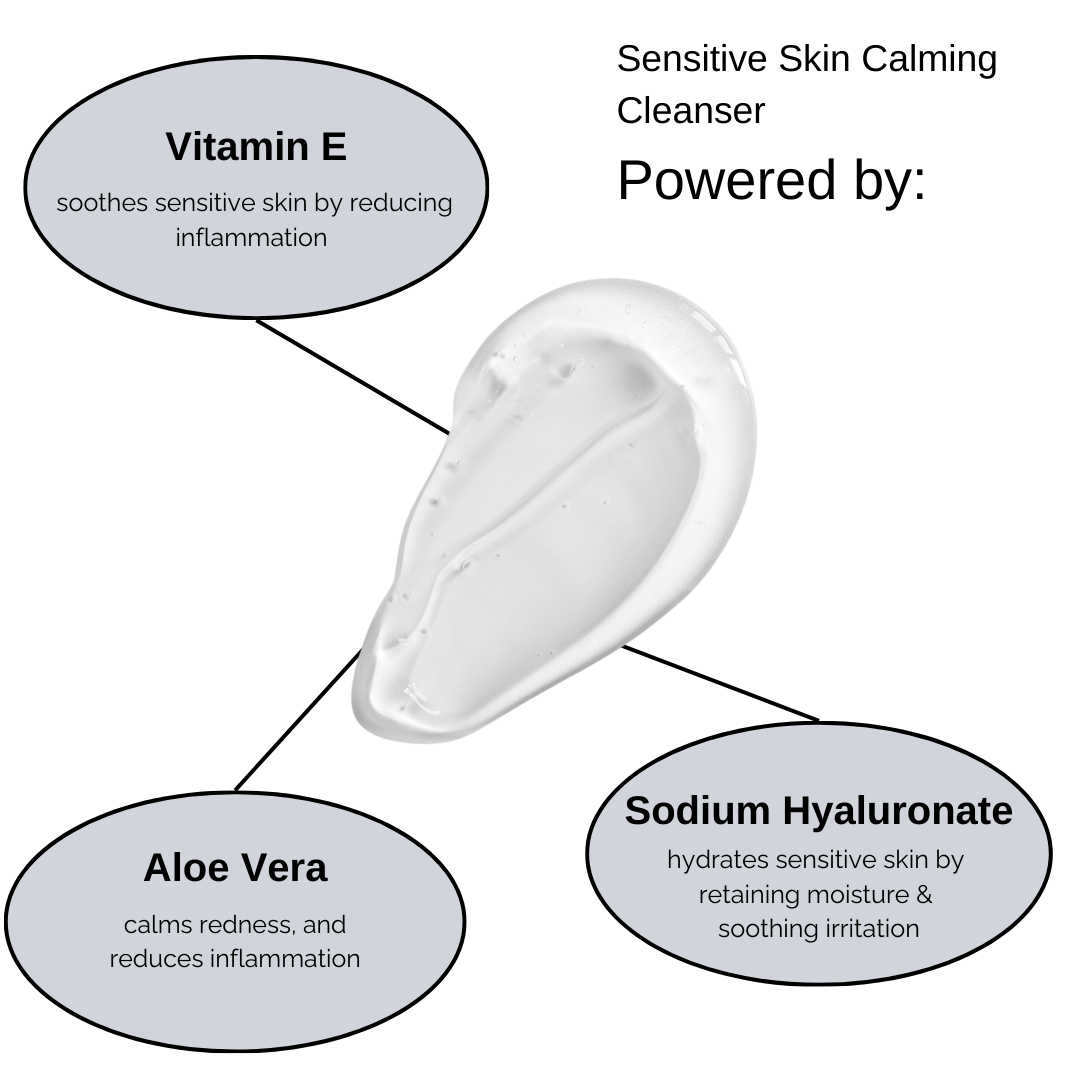
Aloe vera can be a wonderful hydrating and soothing ingredient.
Chamomile contains compounds such as bisabolol that are used for their calming properties.
Certain plant oils can provide fatty acids and emollients that help soften and support dry skin.
The point isn’t that botanical ingredients are good or bad.
It’s that an ingredient should earn its place in a formula because of what it does — not because “natural” looks good on the front of the bottle.
Some “chemical-sounding” ingredients are incredibly useful for sensitive skin
This is something I wish more people understood.
An ingredient can have a long, intimidating name and still be extremely gentle.
Take glycerin.
It’s a humectant that helps attract and retain water in the skin and is one of the most dependable hydration ingredients we have.
Panthenol, or provitamin B5, is another ingredient I love seeing in sensitive-skin formulas because of its moisturizing and skin-conditioning properties.
Allantoin is commonly included in products designed to soothe and condition irritated skin.
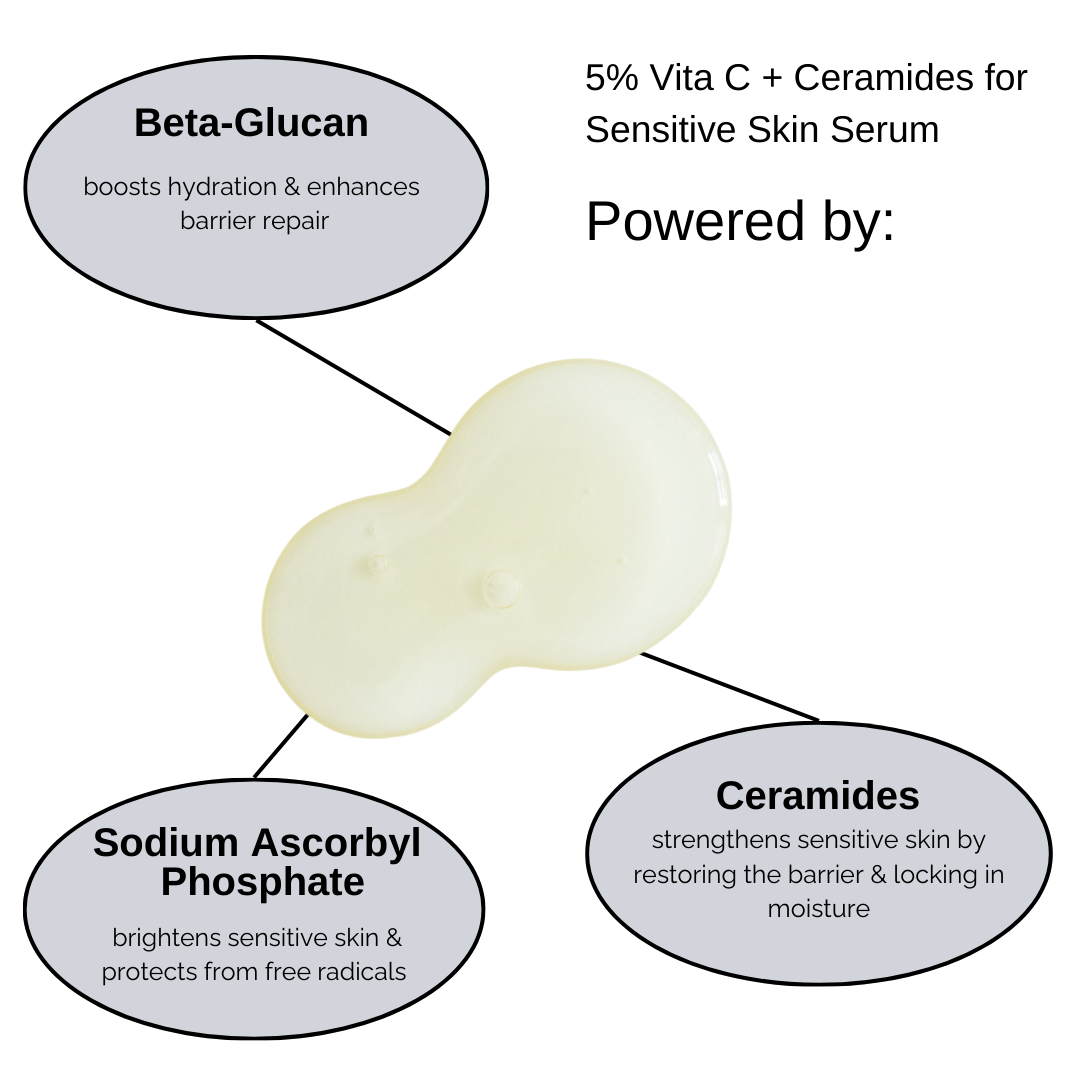
Ceramides help support the lipid structure of the skin barrier.
And sodium hyaluronate, a form of hyaluronic acid, can help attract water and support hydration.
None of these ingredients need a beautiful botanical story to be useful.
They simply do their jobs.
Vitamin C is another great example
For years, skincare marketing conditioned us to think that the strongest or “purest” version of an ingredient must be the best.
But sensitive skin doesn’t always work that way.
L-ascorbic acid is the biologically active form of vitamin C and has excellent evidence behind it. But traditional L-ascorbic acid serums are often formulated at a low pH, and that environment can sting or irritate some reactive skin.
That’s one reason I became interested in sodium ascorbyl phosphate (SAP).
SAP is a more stable vitamin C derivative that can be formulated at a less acidic pH. For someone with sensitive skin who struggles with traditional vitamin C products, that can make a meaningful difference in tolerability.
Does that mean L-ascorbic acid is bad?
Absolutely not.
It means the “best” ingredient depends on the skin you’re formulating for.
Even azelaic acid proves why formulation matters
Azelaic acid is one of my favourite ingredients for redness-prone, blemish-prone and sensitive skin.
But two products containing the same percentage of azelaic acid can feel completely different on your face.
The vehicle matters.
The supporting ingredients matter.
The concentration matters.
How evenly the active is dispersed throughout the formula matters.
The other solvents, preservatives, humectants and emollients surrounding it matter.
That’s why I don’t believe in looking at the hero ingredient on the front of a bottle and deciding whether a product is good or bad.
You have to look at the formula as a whole.
“Chemical-free” skincare isn’t a thing
This phrase is probably one of my biggest skincare pet peeves.
Everything is made of chemicals.
Water is a chemical.
The compounds inside aloe are chemicals.
Vitamin C is a chemical.
The lipids naturally found in your skin are chemicals.
So a skincare product can’t actually be “chemical-free.”
And I think language like this unintentionally teaches people with sensitive skin to be afraid of ingredients they don’t recognize.
I’ve been there.
When your skin is constantly reacting, it’s tempting to start eliminating everything.
But I’ve learned that sensitive skin doesn’t necessarily need the shortest or most natural-looking ingredient list.
It needs a thoughtful one.
Preservatives are a perfect example of why “synthetic” isn’t necessarily bad
Preservatives sometimes get treated like the villains of skincare.
But any formula containing water needs an effective preservation system to protect it from microbial contamination.
Ingredients such as phenoxyethanol may sound far less appealing than a botanical extract when you’re reading the back of a bottle, but preservation is an important part of making a water-based skincare product safe and stable throughout its intended use.
I’d much rather use a properly preserved formula than a product that markets itself as ultra-natural but isn’t adequately protected against microbial growth.
That’s where science has to come before marketing.
“Fragrance-free” matters more to me than “natural”
This is probably one of the biggest ways my thinking has changed since developing products for sensitive skin.
I don’t care if a fragrance comes from a laboratory or a field of lavender.
If we’re creating a product specifically for reactive skin, I don’t think fragrance needs to be there.
It doesn’t improve hydration.
It doesn’t strengthen your skin barrier.
It doesn’t make an active ingredient work better.
It primarily changes the sensory experience of the product.
For someone whose skin tolerates fragrance beautifully, that may not matter.
But when I’m formulating for people whose skin can flush, sting, burn or react easily, I would rather remove an unnecessary variable.
That’s why fragrance-free has become far more meaningful to me than whether a formula can call itself “natural.”
What I look for now
After years of dealing with sensitive skin and developing products for it, I’ve stopped asking whether an ingredient is natural or synthetic.
Instead, I ask:
-
Why is it in the formula?
-
What evidence do we have for what it does?
-
At what concentration is it being used?
-
Is it appropriate for reactive skin?
- What ingredients surround it?
-
Does it improve the formula, or is it there because it sounds good in marketing?
And most importantly:
- Does the finished formula actually work without unnecessarily challenging the skin?
Because that’s ultimately what matters.
There are incredible ingredients that come from nature.
There are incredible ingredients developed or refined through science.
And there are irritating ingredients in both categories.
Sensitive skin doesn’t need us to choose a side between “natural” and “synthetic.”
It needs us to formulate smarter.
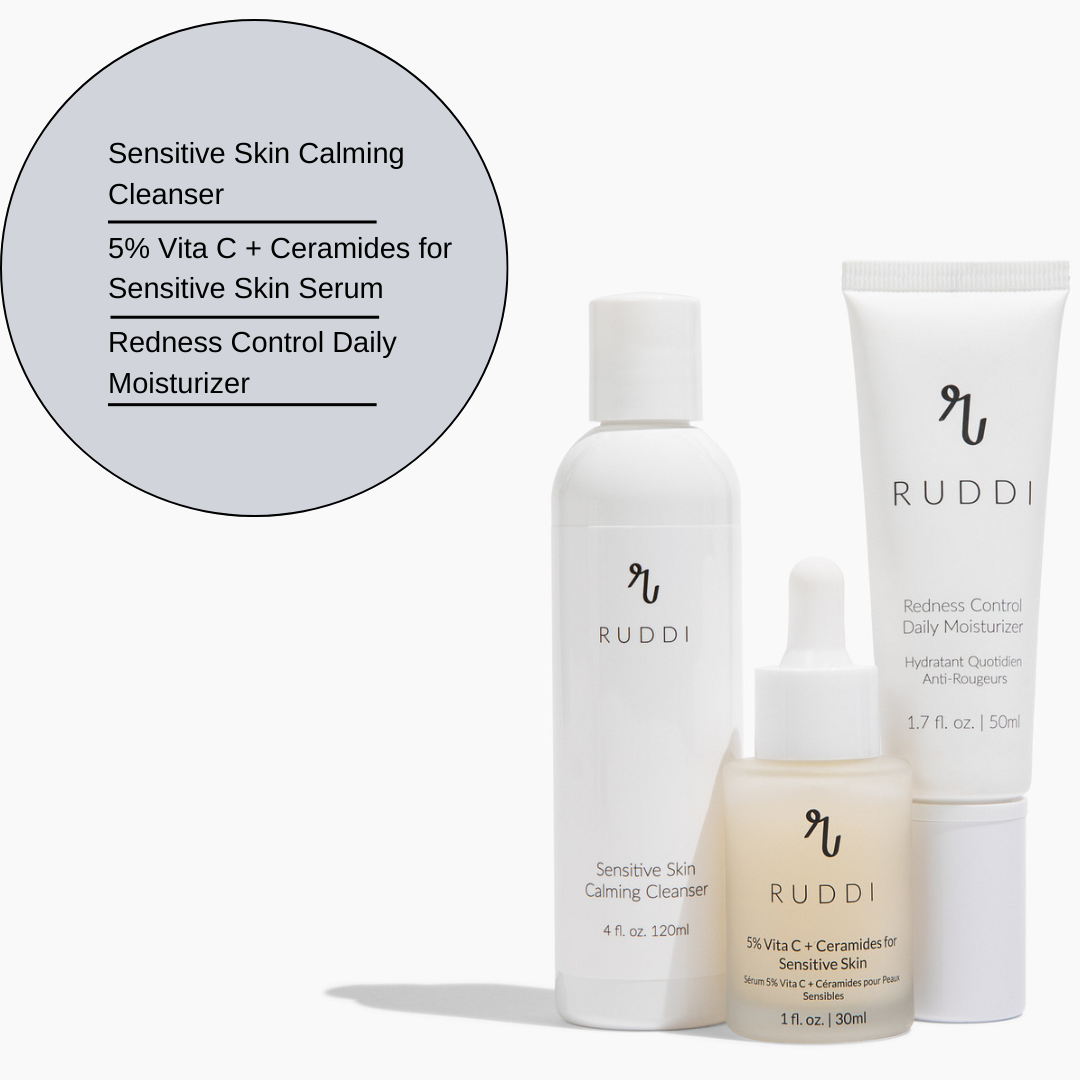
That’s the philosophy I’ve carried into RUDDI from the beginning: choose ingredients with purpose, formulate for the skin we’re actually trying to help, and leave out things that don’t need to be there.